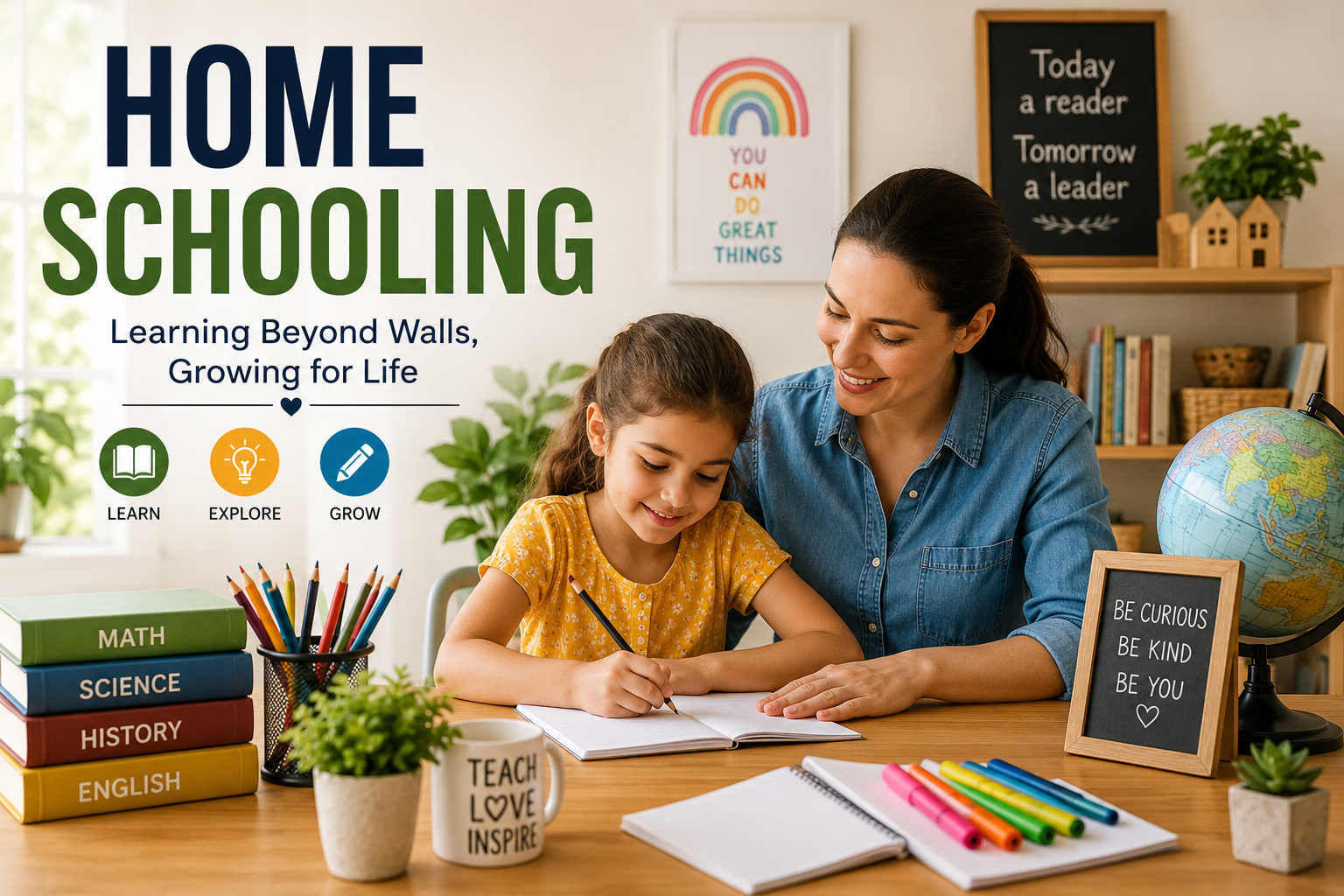
Education does not always have to take place inside a traditional classroom. Homeschooling has become an increasingly popular approach for families who want to create a flexible and personalized learning experience for their children. Instead of following only a standard classroom routine, homeschooling allows parents and children to explore subjects at their own pace and according to their individual interests and needs.
What Is Homeschooling?
Homeschooling is an educational approach in which children receive their education primarily at home rather than attending a traditional school. Parents, guardians, tutors, or online learning programs may help provide lessons and activities.
A homeschooling routine can include traditional subjects such as mathematics, science, languages, history, and geography. It can also include practical skills, creative activities, reading, sports, technology, cooking, gardening, and other areas of interest.
Benefits of Homeschooling
One of the biggest benefits of homeschooling is flexibility. Families can create schedules that suit their lifestyles and children’s learning patterns. A child who needs more time to understand a particular topic can spend additional time practicing it, while a child who learns quickly can move forward without waiting for the rest of a class.
Homeschooling can also provide personalized learning. Every child has different strengths, interests, and learning styles. Parents can choose teaching methods and educational materials that match their child's needs.
Another advantage is the opportunity for parents and children to spend more time together. Learning activities can become opportunities for communication, creativity, and exploration.
Making Homeschooling Interesting
Homeschooling does not have to mean sitting at a desk all day. Parents can make learning more enjoyable through hands-on activities and real-world experiences.
For example, a science lesson can include a simple experiment, while mathematics can be practiced through shopping, cooking, or budgeting. History can become more interesting through documentaries, museum visits, books, and local historical sites.
Reading is another important part of homeschooling. Encouraging children to read stories, biographies, newspapers, and educational books can improve vocabulary, imagination, and general knowledge.
Outdoor activities are equally valuable. Nature walks, gardening, sports, and field trips can help children learn while staying active.
Challenges of Homeschooling
Although homeschooling has many benefits, it also comes with challenges. Parents need to invest time in planning lessons, finding suitable resources, and maintaining a consistent routine. It can sometimes be difficult to balance education with household responsibilities and work.
Social interaction is another important consideration. Children benefit from friendships and group activities, so homeschooling families can participate in sports clubs, community programs, educational groups, workshops, and extracurricular activities.
Parents should also regularly review their children's progress and adjust the learning plan when necessary.
Conclusion
Homeschooling can provide children with a flexible, personalized, and creative educational experience. With thoughtful planning, suitable resources, regular social activities, and a supportive learning environment, families can make homeschooling both productive and enjoyable.
The goal of homeschooling is not simply to recreate a traditional classroom at home. It is an opportunity to encourage curiosity, develop practical skills, support individual interests, and help children become confident lifelong learners.