📚 Not All Readers Are Leaders, But All Leaders Are Readers
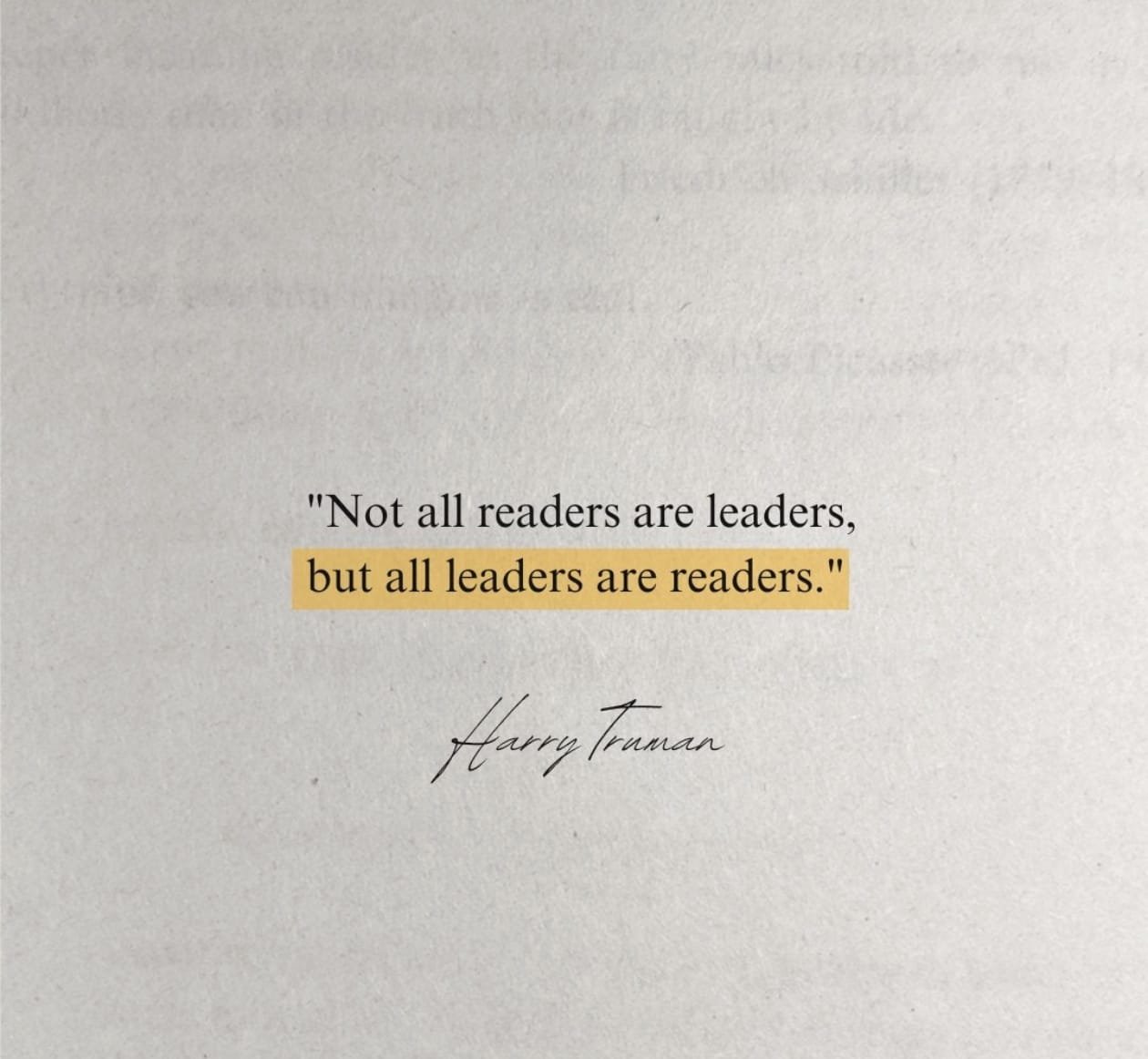
“Not all readers are leaders, but all leaders are readers.”
This powerful quote reminds us that reading is one of the foundations of effective leadership. Simply reading books does not automatically make someone a leader. A person may read hundreds of books but never take action, make decisions, or inspire others. However, almost every great leader develops the habit of reading because reading expands the mind and improves the ability to understand people and situations.
A good leader is a lifelong learner. Through books, articles, biographies, history, and different perspectives, leaders learn from experiences that they may never personally encounter. Reading exposes us to new ideas, cultures, mistakes, discoveries, and ways of thinking. It helps us look beyond our own limited experiences.
Reading also develops critical thinking and decision-making skills. A leader often has to face difficult situations and make choices that affect others. The more knowledge and perspectives a person has, the better they can analyse a problem before making a decision.
But there is an important difference between reading and learning. True leaders don't just collect information—they apply it. They read about discipline and become disciplined. They read about communication and improve the way they speak. They read about successful people and learn from their failures as well as their achievements.
Leadership does not always mean having a position, title, or authority. A parent guiding a child, a teacher inspiring students, or an ordinary person motivating others can demonstrate leadership.
So, if you want to become a better leader, start by becoming a better reader—but don't stop at reading. Think, learn, apply, and act.
Because books can fill your mind with knowledge, but your actions turn that knowledge into leadership.
Not all leaders are readers,but all readers are leaders