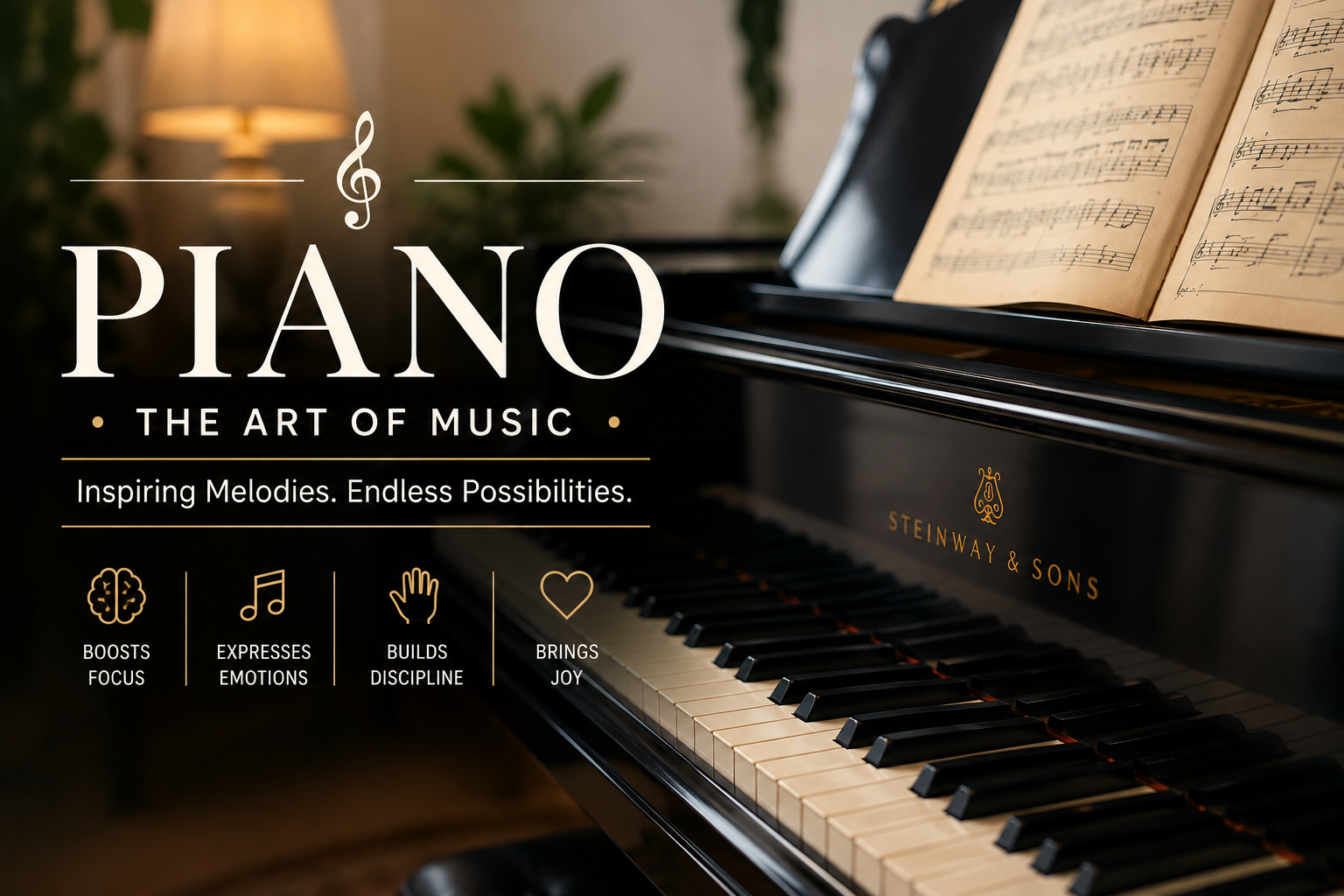
The piano is one of the most beautiful and versatile musical instruments in the world. From classical masterpieces to jazz, pop, film music, and modern compositions, the piano has played an important role in music for centuries.
Learning to play the piano is not only a creative activity but also a rewarding way to develop concentration, patience, coordination, and confidence.
Why Is the Piano So Popular?
One reason for the piano's popularity is its versatility. A pianist can play melodies, harmonies, rhythms, and multiple musical parts at the same time. This makes the instrument suitable for many different styles of music.
The piano is also accessible to beginners. Although mastering the instrument requires years of practice, beginners can learn simple songs and basic melodies relatively quickly.
Benefits of Learning Piano
Playing the piano can improve concentration and memory because musicians need to remember notes, rhythms, chords, and musical patterns.
It can also improve hand-eye coordination. Pianists often read music while moving both hands independently across the keyboard.
Another important benefit is emotional expression. Music provides a way to communicate feelings that may sometimes be difficult to express with words. Playing a favorite song can be relaxing, enjoyable, and personally meaningful.
How to Start Learning Piano
Beginners should start with the basics rather than trying to play complicated pieces immediately. Learning correct posture, hand position, rhythm, and basic notes creates a strong foundation.
Practicing regularly is more important than practicing for many hours occasionally. Even 15 to 30 minutes of focused practice each day can help build consistency.
Start with simple exercises and easy songs. As your skills improve, gradually introduce scales, chords, sight-reading, and more challenging pieces.
The Importance of Practice
Progress on the piano comes from patience and regular practice. Some pieces may seem difficult at first, but breaking them into smaller sections can make them easier to learn.
Practice slowly before increasing your speed. Pay attention to mistakes and repeat difficult sections until they become comfortable.
It is also helpful to practice with a metronome. This can improve timing and help develop a steady rhythm.
Piano and Creativity
The piano is not only an instrument for reproducing existing songs. It can also be a tool for creativity.
Once players understand basic chords and musical patterns, they can experiment with creating melodies and compositions. Improvisation can help musicians develop confidence and discover their own musical style.
Choosing the Right Piano
There are several types of pianos, including acoustic pianos, digital pianos, and keyboards.
An acoustic piano produces sound through strings and hammers and offers a traditional playing experience. Digital pianos use electronic technology and can be convenient for homes where space or noise is a concern.
Keyboards are often affordable and portable, making them useful for beginners and musicians who want flexibility.
The best choice depends on your budget, available space, goals, and personal preferences.
Conclusion
Learning the piano is a journey that combines discipline, creativity, and enjoyment. You do not need to become a professional musician to benefit from playing.
With regular practice and patience, beginners can gradually develop their skills, learn favorite songs, and discover the joy of creating music.
Whether you dream of performing on stage or simply want a relaxing hobby, the piano can become a lifelong source of creativity and inspiration.