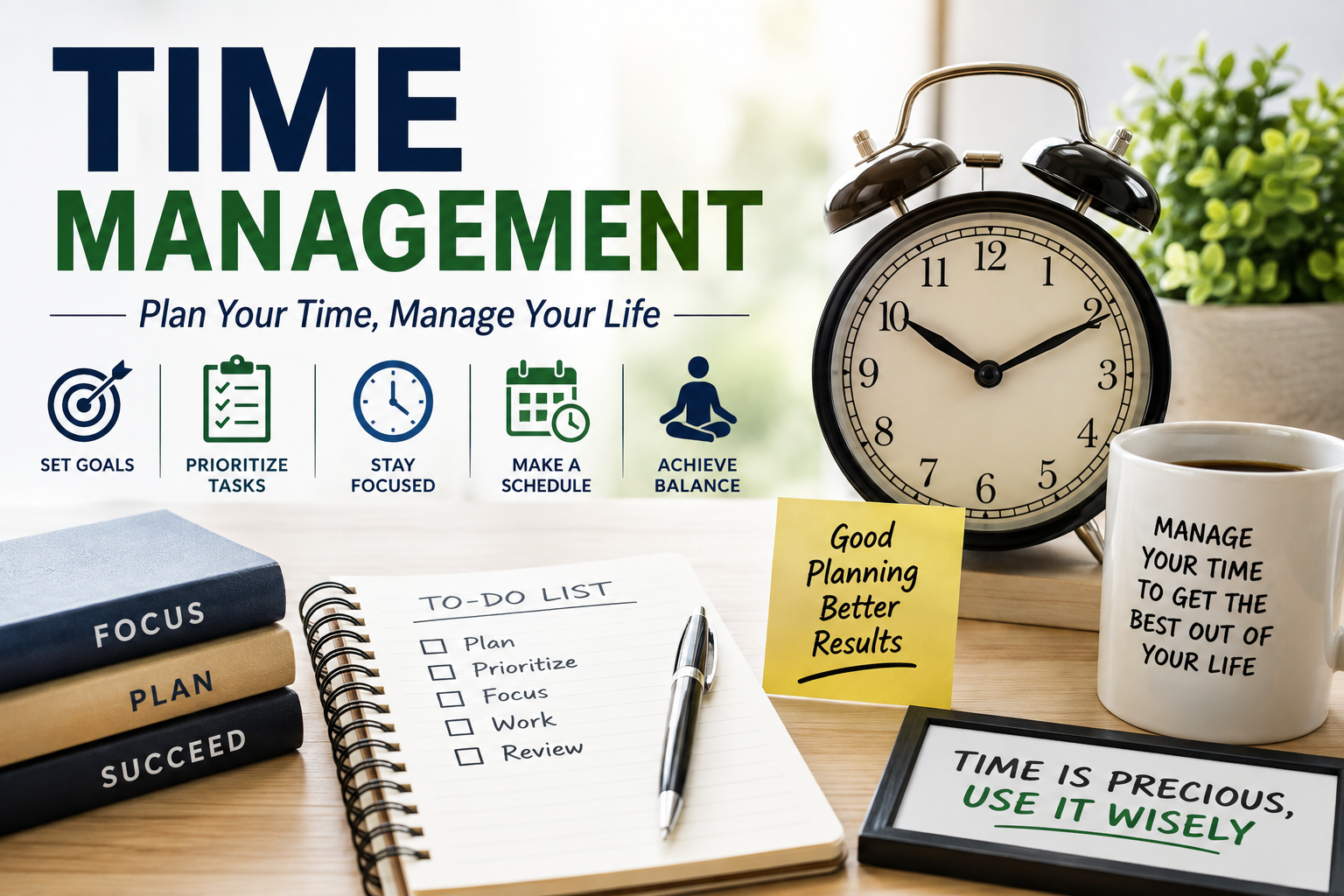
Time is one of the most valuable resources in life. Everyone has the same 24 hours in a day, but the way people use those hours can make a major difference in their personal and professional lives. Good time management helps us complete important tasks, reduce stress, achieve goals, and create more balance in our daily routines.
In today's busy world, people often have many responsibilities at the same time. Work, studies, family, social activities, and personal goals can compete for our attention. Without proper planning, it is easy to feel overwhelmed. Learning how to manage time effectively can help us become more organized and productive.
What Is Time Management?
Time management is the process of planning and organizing how you spend your available time. It involves deciding what tasks are important, setting priorities, creating schedules, and avoiding activities that unnecessarily waste time.
Effective time management does not mean working every minute of the day. Instead, it means using your time wisely so that you can complete important responsibilities while still making time for rest, family, hobbies, and yourself.
Why Is Time Management Important?
Good time management can improve many areas of life. One major benefit is increased productivity. When you have a clear plan, you know what needs to be done and can focus on completing tasks instead of constantly deciding what to do next.
Time management can also reduce stress. Deadlines and unfinished tasks often create anxiety. By starting tasks early and dividing large projects into smaller steps, you can avoid unnecessary last-minute pressure.
Another important benefit is better work-life balance. Managing your responsibilities efficiently can help you finish important work on time and leave space for relaxation and personal activities.
Set Clear Goals
One of the first steps toward better time management is setting clear goals. Goals give you direction and help you decide how to spend your time.
For example, instead of saying, “I want to study more,” create a specific goal such as, “I will study mathematics for one hour every evening.” A clear goal is easier to plan and measure.
You can divide goals into short-term and long-term goals. Short-term goals might include completing today's assignments, while long-term goals could involve finishing a course, learning a new skill, or achieving a career objective.
Prioritize Your Tasks
Not every task has the same level of importance. Learning to prioritize is therefore essential.
Start by identifying tasks that are both important and urgent. Complete these first. Then focus on important tasks that may not be urgent but contribute to your long-term goals.
Making a daily to-do list can be helpful. However, avoid creating an unrealistic list with too many tasks. Choose a few important tasks that you can realistically complete during the day.
Avoid Procrastination
Procrastination is one of the biggest obstacles to effective time management. It happens when we delay important tasks even though we know they need to be completed.
A simple way to overcome procrastination is to break a large task into smaller parts. Instead of thinking, “I have to finish this entire project,” focus on completing the first small step.
You can also use a timer to work for a focused period followed by a short break. Removing distractions such as unnecessary phone notifications and social media can also improve concentration.
Create a Daily Schedule
A daily schedule provides structure and helps you use your time intentionally. At the beginning or end of each day, write down the tasks you want to accomplish.
Assign approximate time periods to important activities. Remember to leave some flexibility because unexpected events can occur.
A good schedule should also include breaks. Rest is not wasted time. Regular breaks can help you maintain concentration and prevent exhaustion.
Learn to Say No
Sometimes poor time management happens because we take on too many responsibilities. Learning to say “no” to activities that are not important can protect your time and energy.
This does not mean refusing every request. It means understanding your priorities and making thoughtful choices about where your time should go.
Use Technology Wisely
Technology can be both helpful and distracting. Calendar applications, reminders, task-management tools, and digital notes can help you organize your responsibilities.
At the same time, excessive social media use, entertainment, and constant notifications can consume valuable hours. Set boundaries around distracting applications and use technology primarily as a tool to support your goals.
Make Time for Yourself
Effective time management should not be focused only on work. Rest, exercise, hobbies, family, and social connections are important parts of a healthy life.
Schedule time for activities that help you relax and recharge. When you take care of your physical and emotional well-being, you may find it easier to concentrate and perform your responsibilities effectively.
Conclusion
Time management is a skill that can improve both productivity and quality of life. By setting clear goals, prioritizing important tasks, avoiding procrastination, creating realistic schedules, and limiting distractions, you can make better use of your time.
The goal is not to fill every minute with work. The real purpose of time management is to spend your time on the things that matter most. With consistent practice, small changes in your daily routine can lead to greater productivity, less stress, and a more balanced life.