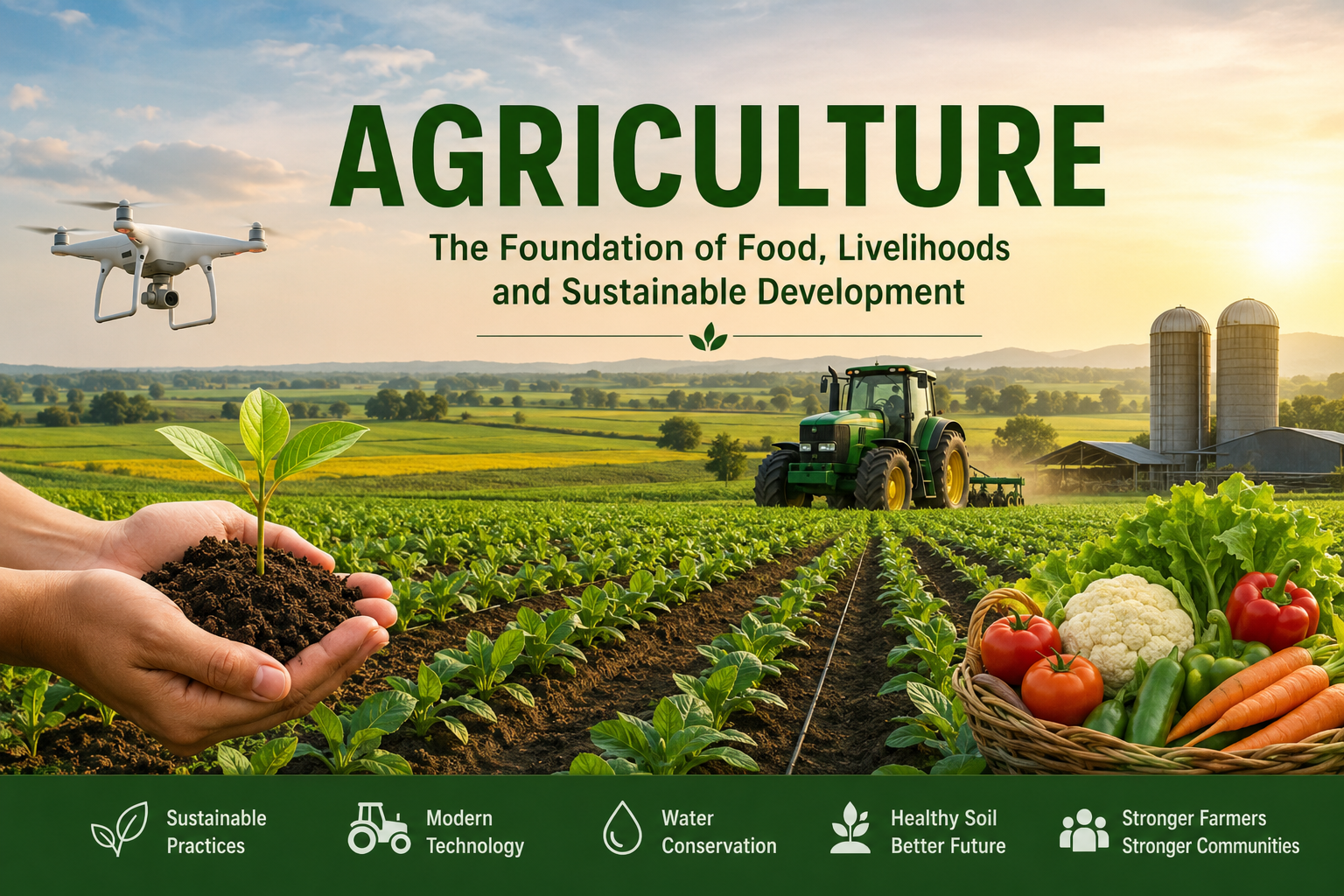
Agriculture is one of the oldest and most important activities in human civilization. From growing crops and raising livestock to producing fruits, vegetables, grains, and other essential products, agriculture supports billions of people around the world. It provides food, creates employment, supports rural communities, and contributes significantly to national economies.
In today’s rapidly changing world, agriculture is facing new challenges, including climate change, water shortages, soil degradation, population growth, and changing consumer demands. At the same time, modern technology and sustainable farming practices are creating new opportunities for farmers to produce food more efficiently while protecting the environment.
The Importance of Agriculture
Agriculture plays a central role in our daily lives. Almost everything we eat begins with farming. Rice, wheat, vegetables, fruits, pulses, spices, dairy products, and many other foods depend on agricultural production.
Agriculture is also an important source of employment, particularly in rural areas. Millions of farmers, farm workers, traders, food processors, transporters, and retailers depend on agriculture for their livelihoods. A strong agricultural sector can therefore contribute to economic growth and help reduce poverty.
Beyond food production, agriculture supplies raw materials for many industries. Cotton is used to make clothing, sugarcane is used in food and biofuel production, and various crops provide materials for medicines, cosmetics, paper, and other products.
Modern Agriculture and Technology
Technology is transforming the way farming is carried out. Traditional farming methods are increasingly being combined with modern tools that can help farmers save time, reduce costs, and improve productivity.
Farmers can now use smartphones, weather applications, satellite information, sensors, and GPS-based equipment to make better decisions. Drones can be used to monitor crops and identify areas affected by pests, diseases, or water shortages.
Modern irrigation systems can also help farmers use water more efficiently. Drip irrigation, for example, delivers water directly to plant roots and can reduce unnecessary water loss. Agricultural machinery such as tractors, harvesters, and automated equipment can reduce manual labor and increase efficiency.
These technologies are particularly valuable when they are affordable, accessible, and supported by proper training for farmers.
Sustainable Agriculture
As the world's population grows, producing enough food while protecting natural resources has become increasingly important. Sustainable agriculture focuses on meeting present food needs without damaging the ability of future generations to produce food.
Farmers can adopt several sustainable practices. Crop rotation helps maintain soil fertility and can reduce the buildup of pests and diseases. Compost and organic materials can improve soil health. Integrated pest management can reduce excessive dependence on chemical pesticides.
Water conservation is another important part of sustainable farming. Rainwater harvesting, efficient irrigation, and soil-moisture management can help farmers protect valuable water resources.
Agroforestry, which combines trees with crops or livestock, can also provide environmental benefits. Trees can help reduce soil erosion, improve biodiversity, provide shade, and store carbon.
The Role of Farmers
Farmers are at the heart of agriculture. Their knowledge, hard work, and experience make food production possible. However, farmers often face significant risks. Unpredictable weather, fluctuating market prices, rising input costs, pests, diseases, and limited access to finance can affect their income.
Supporting farmers requires more than providing agricultural equipment. Farmers need access to quality seeds, affordable credit, reliable irrigation, storage facilities, transportation, markets, agricultural education, and accurate weather information.
Education and training can help farmers learn about modern farming techniques, sustainable practices, crop management, and new technologies. Strong connections between farmers, agricultural experts, researchers, businesses, and government institutions can create a more resilient agricultural system.
Agriculture and Climate Change
Climate change is one of the major challenges facing agriculture. Changes in temperature and rainfall patterns can affect crop growth and livestock production. Extreme weather events such as droughts, floods, heatwaves, and storms can cause serious agricultural losses.
Farmers can respond by adopting climate-smart practices. These may include drought-resistant crops, efficient irrigation, improved soil management, crop diversification, and better weather forecasting.
Agriculture can also contribute to climate solutions. Healthy soils, trees, and well-managed agricultural landscapes can store carbon and support biodiversity. Reducing food waste and improving the efficiency of agricultural supply chains can further reduce environmental impacts.
The Future of Agriculture
The future of agriculture will depend on a combination of traditional knowledge, scientific research, technology, and sustainable practices. Artificial intelligence, robotics, precision farming, biotechnology, and digital marketplaces may increasingly influence how food is produced and sold.
However, technological progress should benefit farmers of different sizes, including small and family-owned farms. Affordable technology, accessible education, and supportive agricultural policies will be essential.
Consumers also have a role to play. Choosing locally produced foods when possible, reducing food waste, supporting responsible farming, and understanding where food comes from can contribute to a healthier agricultural system.
Conclusion
Agriculture is much more than the production of food. It supports livelihoods, strengthens communities, supplies industries, and plays an important role in economic and environmental development. As agriculture faces challenges from climate change, resource shortages, and growing food demand, sustainable and innovative approaches are becoming increasingly important.
The future of farming should focus on producing nutritious food efficiently while protecting soil, water, biodiversity, and the people who depend on agriculture. By combining farmer knowledge with modern technology and sustainable practices, we can build a stronger and more resilient agricultural system for future generations.