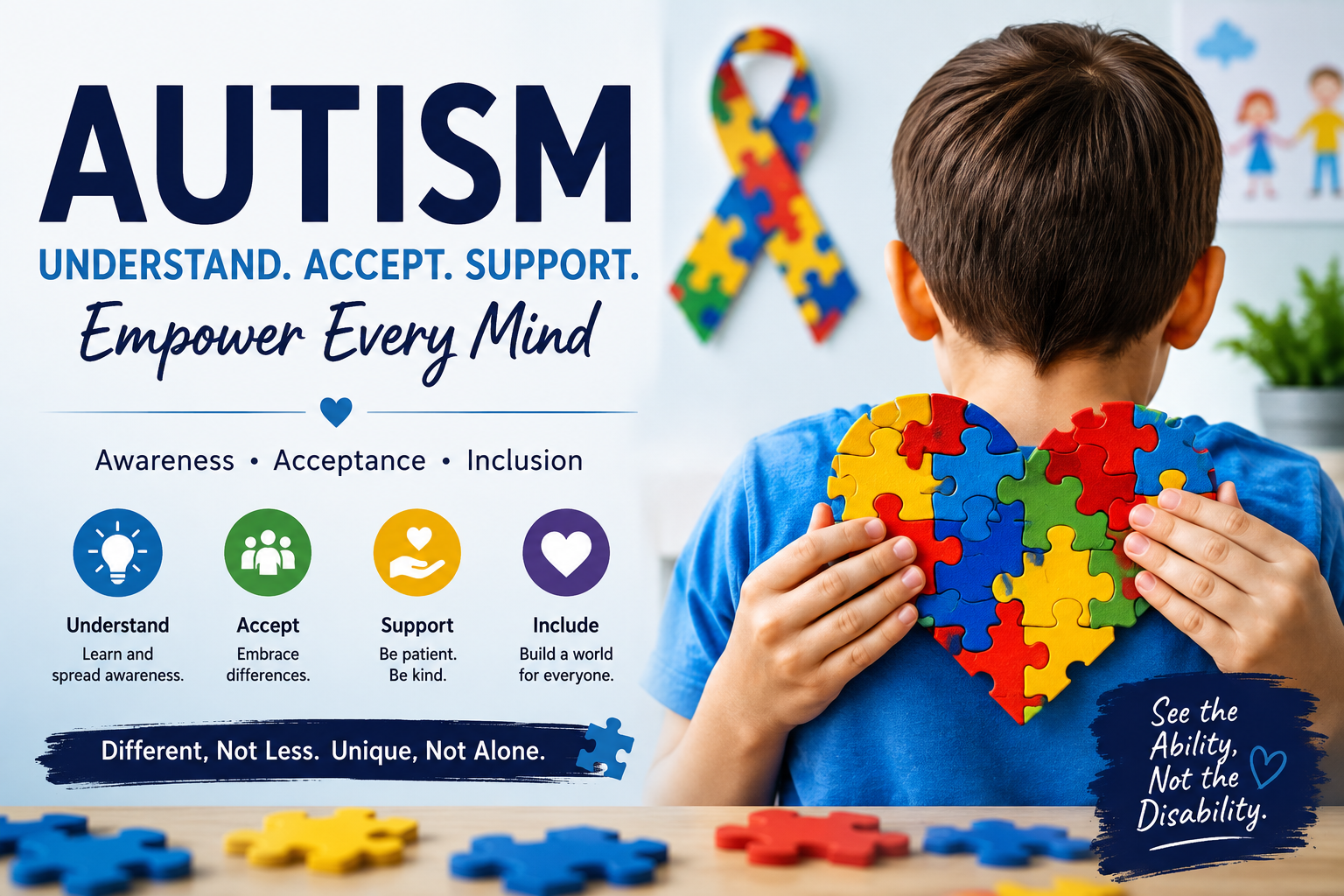
Autism is a developmental difference that affects how a person experiences communication, social interaction, sensory information, and the world around them. Every autistic person is different, which is why autism is often described as a spectrum. Understanding these differences can help create a more accepting and supportive society.
What Is Autism?
Autism, or autism spectrum disorder (ASD), is a lifelong developmental condition. Some autistic people may communicate verbally, while others may communicate in different ways. Some may enjoy social interaction, while others may prefer more time alone.
Autism can also involve differences in sensory processing. Sounds, lights, textures, smells, or crowded environments may feel particularly intense for some people. Others may seek additional sensory experiences.
Every Autistic Person Is Different
There is no single way to be autistic. Some people may need significant support with everyday activities, while others may live independently and require fewer accommodations. Some autistic individuals may have strong interests, excellent attention to detail, creative abilities, or specialized knowledge in particular subjects.
It is important to avoid stereotypes and remember that a person's abilities and challenges cannot be determined simply by an autism diagnosis.
Supporting Autistic Children
Children benefit from understanding, patience, and appropriate support. Parents, teachers, and caregivers can help by creating predictable routines, communicating clearly, and paying attention to each child's individual needs.
Schools can also provide accommodations that make learning more accessible. Quiet spaces, visual schedules, flexible learning methods, and additional time when appropriate can help some students participate more comfortably.
Creating Inclusive Communities
Inclusion means more than simply allowing autistic people to participate. It means creating environments where they can feel respected, comfortable, and valued.
Communities can become more inclusive by improving accessibility, reducing unnecessary sensory challenges, offering clear information, and listening to autistic people's experiences when designing services and programs.
Moving Beyond Stereotypes
Public understanding of autism has improved, but misconceptions still exist. Autism should not be viewed only through difficulties or limitations. At the same time, it is important not to romanticize autism or assume that every autistic person has the same strengths and experiences.
Listening to autistic voices is one of the best ways to understand the diversity of the autism spectrum.
The Importance of Acceptance
Acceptance begins with recognizing that people communicate, learn, think, and experience the world in different ways. Instead of expecting everyone to behave in exactly the same manner, society can focus on providing reasonable support and opportunities.
Small actions—such as being patient with communication differences, respecting sensory needs, and avoiding judgment—can make a meaningful difference.
Conclusion
Autism is part of the diversity of human development. Greater awareness, acceptance, accessibility, and respect can help autistic people participate fully in education, work, family life, and their communities.
The goal should not be to make everyone the same. It should be to build a world where differences are understood, individual needs are respected, and every person has the opportunity to live a meaningful and fulfilling life.