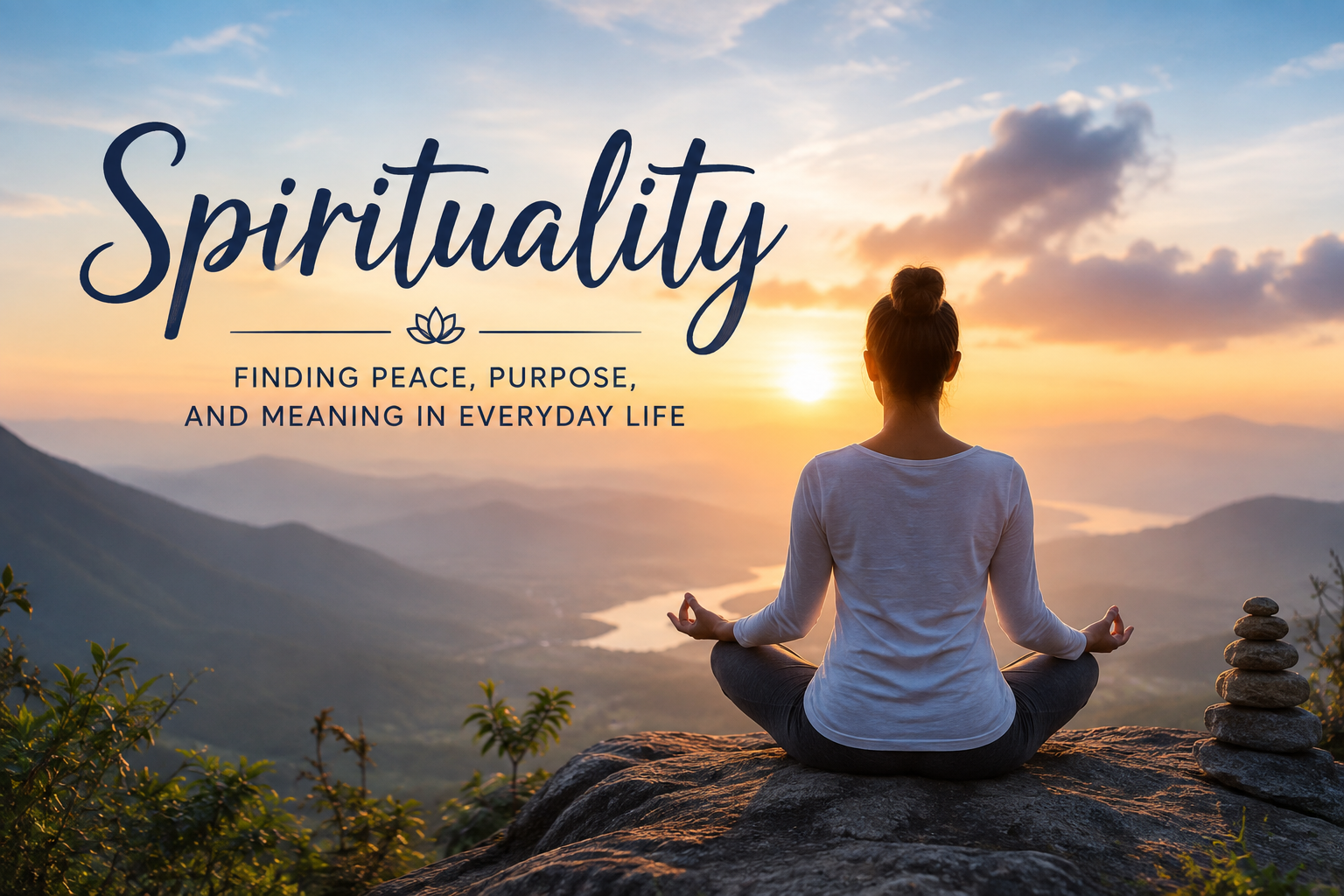
Spirituality is a deeply personal journey that helps us understand ourselves, our purpose, and our connection with the world around us. In a busy world filled with responsibilities, technology, and constant distractions, spirituality can provide a sense of peace and inner balance.
Spirituality does not have to mean following a particular religion or tradition. For some people, it may be connected to faith and prayer. For others, it may involve meditation, nature, mindfulness, self-reflection, or simply living with kindness and compassion. At its heart, spirituality is about discovering what gives life meaning and learning to live with greater awareness.
Understanding Spirituality
Spirituality encourages us to look beyond material possessions and external achievements. While career success, money, and recognition can be important, they do not always provide lasting happiness. Spirituality encourages us to explore deeper questions such as: Who am I? What truly matters to me? What kind of person do I want to become?
These questions can help us develop a stronger understanding of ourselves and our values. When we become more aware of our thoughts, emotions, and actions, we can make choices that are more meaningful and purposeful.
The Importance of Inner Peace
One of the greatest benefits of spirituality is the opportunity to develop inner peace. Life will always contain challenges, disappointments, and uncertainty. We cannot control everything that happens, but we can learn how to respond to difficult situations.
Practices such as meditation, deep breathing, prayer, journaling, and spending quiet time alone can help calm the mind. Even a few minutes of silence each day can create space for reflection and relaxation.
Inner peace does not mean that problems disappear. Instead, it means developing the strength and awareness to face problems without allowing them to completely control our emotions.
Spirituality and Self-Awareness
Self-awareness is an important part of spiritual growth. It involves understanding our thoughts, feelings, habits, strengths, and weaknesses.
Taking time to reflect on our experiences can help us recognize negative patterns and make positive changes. For example, we may discover that anger, fear, jealousy, or worry is affecting our relationships and happiness. Recognizing these emotions is the first step toward managing them in a healthier way.
Spirituality encourages us to accept ourselves while continuing to grow.
Practicing Spirituality in Daily Life
Spirituality does not require complicated rituals. Small daily practices can make a meaningful difference. You can begin your morning with a few minutes of silence, practice gratitude, spend time in nature, read inspirational books, meditate, or help someone without expecting anything in return.
Kindness is also a powerful spiritual practice. Listening to someone, forgiving others, expressing gratitude, and offering support can create a stronger sense of connection with the people around us.
Finding Purpose
Many people search for happiness without first understanding their purpose. Spirituality can encourage us to think about what makes our lives meaningful.
Purpose can come from many places. It may be raising a family, helping others, creating something valuable, learning new things, serving a community, or pursuing meaningful work. Purpose does not have to be extraordinary. Sometimes, living honestly, kindly, and responsibly is itself a meaningful purpose.
Conclusion
Spirituality is a personal journey rather than a destination. It encourages us to slow down, understand ourselves, appreciate the present moment, and discover what truly matters.
By practicing mindfulness, gratitude, compassion, self-reflection, and kindness, we can develop greater inner peace and a deeper sense of purpose. In a world that often encourages us to look outside ourselves for happiness, spirituality reminds us that peace and meaning can also begin within.