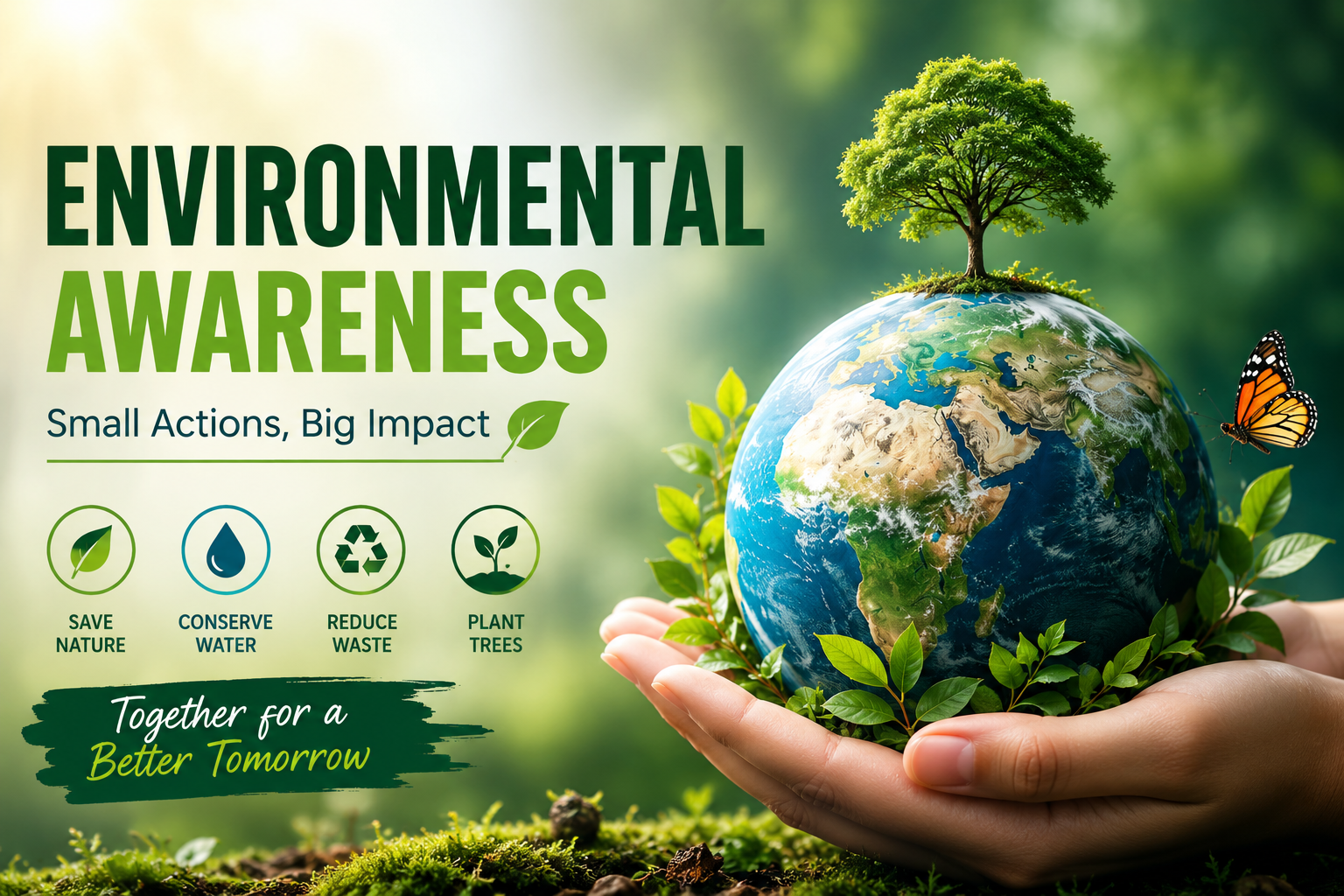
Environmental awareness means understanding the importance of our natural surroundings and recognizing how our actions affect the planet. The environment provides us with clean air, fresh water, food, forests, and other resources that are essential for life. However, pollution, deforestation, climate change, plastic waste, and excessive use of natural resources are putting increasing pressure on our planet. Creating environmental awareness is therefore an important step toward building a healthier and more sustainable future.
Why Environmental Awareness Matters
Environmental awareness helps people understand the consequences of everyday activities. Throwing plastic on the ground, wasting water, using excessive electricity, and depending heavily on private vehicles may seem like small actions, but when millions of people do them, their impact becomes significant.
A better understanding of environmental problems encourages individuals and communities to make responsible choices. People who are aware of environmental issues are more likely to reduce waste, conserve water, save energy, plant trees, and protect wildlife.
Major Environmental Challenges
One of the biggest challenges facing the world today is climate change. The increasing concentration of greenhouse gases in the atmosphere is contributing to rising temperatures and changing weather patterns. Extreme heat, floods, droughts, and other environmental problems can affect communities, agriculture, and wildlife.
Plastic pollution is another serious concern. Millions of tonnes of plastic waste enter the environment every year. Plastic can remain in nature for a very long time and can harm animals and marine life. Reducing single-use plastics and choosing reusable alternatives can help address this problem.
Deforestation also threatens the environment. Forests absorb carbon dioxide, produce oxygen, protect biodiversity, and support millions of people. Cutting down forests without proper replanting can contribute to soil erosion, habitat loss, and climate change.
How We Can Protect the Environment
Environmental protection does not always require major changes. Simple daily habits can make a meaningful difference. We can switch off lights and electronic devices when they are not needed, use water carefully, avoid unnecessary plastic products, recycle whenever possible, and choose reusable bags and bottles.
Using public transportation, walking, or cycling when practical can also reduce pollution. Planting and protecting trees is another effective way to support cleaner air and healthier ecosystems.
Businesses and governments also have important roles to play. Companies can adopt sustainable production methods and reduce waste, while governments can create effective environmental policies, improve waste-management systems, protect forests, and encourage renewable energy.
The Role of Education
Education is one of the most powerful tools for creating environmental awareness. Schools can teach children about conservation, recycling, biodiversity, and climate change. Communities can organize clean-up campaigns, tree-planting activities, and awareness programs.
When young people learn to respect nature from an early age, they are more likely to develop environmentally responsible habits that continue throughout their lives.
Conclusion
Environmental awareness is not only about protecting nature; it is about protecting our own future. Every person has a role to play in creating a cleaner and healthier planet. Small actions, when adopted by millions of people, can create significant change. By reducing waste, conserving resources, protecting wildlife, and educating others, we can help build a sustainable world for present and future generations.
Protecting the environment starts with awareness—and awareness starts with each one of us.