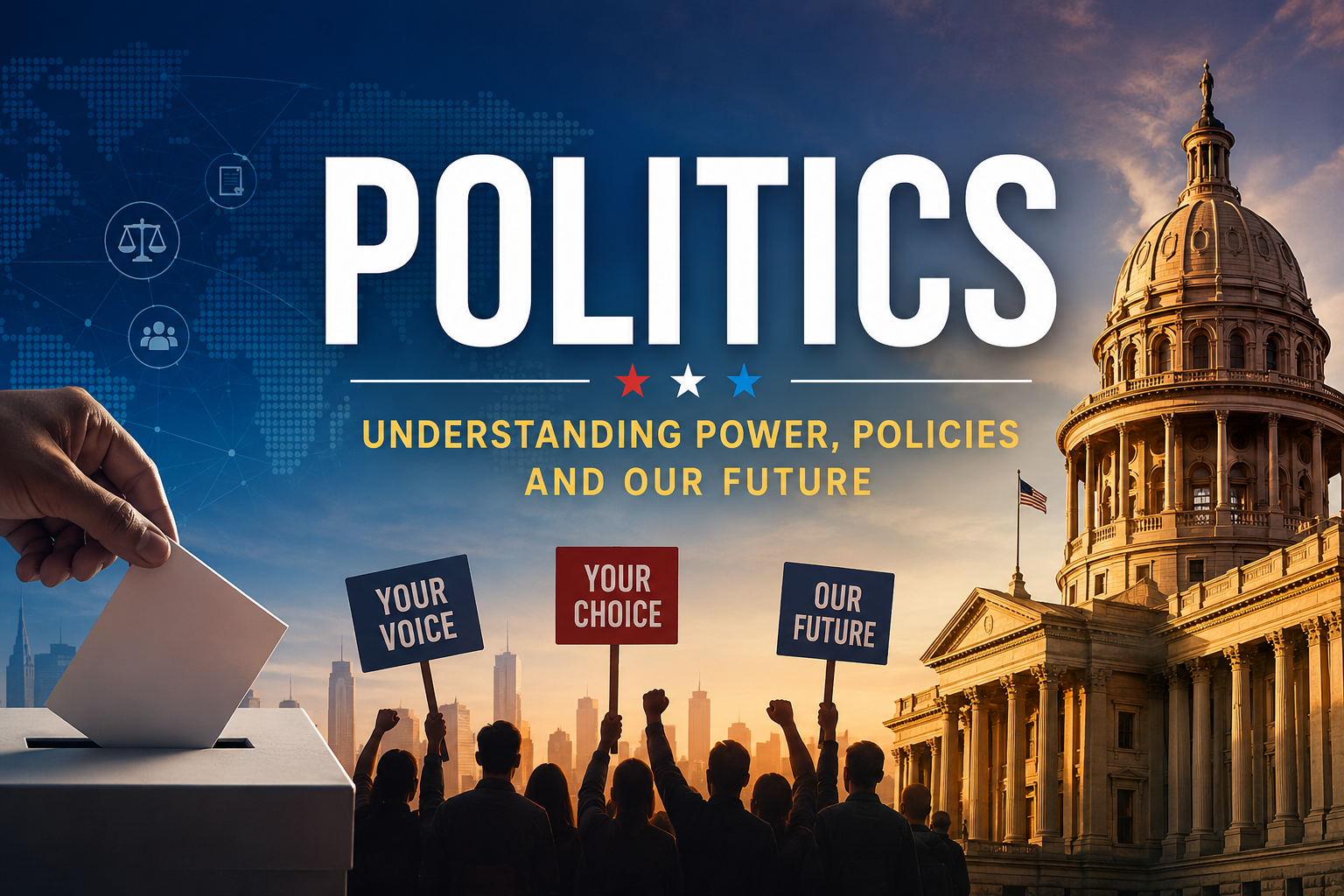
Politics is an important part of everyday life, even for people who do not actively follow political news. Decisions made by governments can influence education, employment, healthcare, taxes, transportation, business, technology, the environment, and many other areas of society. Understanding politics helps citizens make informed decisions and participate responsibly in their communities.
What Is Politics?
Politics is the process through which individuals, groups, and governments make decisions about how a society should be organized and governed. It involves discussions about laws, public policies, rights, responsibilities, resources, and the direction of a country.
Political systems differ from country to country. Some countries have presidential systems, while others have parliamentary systems. Regardless of the system, politics generally involves leaders, political parties, institutions, citizens, and organizations working to influence public decisions.
Politics is not limited to elections or political parties. Local government decisions, community discussions, public policies, and debates about social issues are also part of political life.
The Importance of Democracy
Democracy gives citizens a voice in how their country is governed. In a democratic system, people generally have the opportunity to elect representatives and participate in public discussions.
Free and fair elections are an important part of democracy because they allow citizens to choose their representatives. However, democracy involves more than voting. It also depends on institutions, laws, accountability, freedom of expression, and respect for different opinions.
A healthy democracy allows people with different views to participate peacefully. Citizens may disagree about economic policies, education, healthcare, taxation, or social issues, but democratic institutions provide ways to debate these differences.
Political Parties and Their Role
Political parties play a major role in modern politics. A political party usually brings together people who share particular ideas, priorities, or policy goals.
Parties develop election platforms, nominate candidates, communicate with voters, and attempt to influence government policy. In parliamentary systems, parties may form governments or work as opposition parties.
Political parties can help voters understand different policy choices. At the same time, citizens should examine political claims carefully rather than accepting every statement made by a party or candidate.
How Politics Affects Everyday Life
Politics may seem distant from everyday activities, but government decisions can have direct consequences for individuals and families.
For example, decisions about education can affect schools, teachers, students, and educational opportunities. Economic policies can influence businesses, employment, prices, and investment. Transportation policies can affect roads, public transport, and infrastructure.
Environmental policies can influence pollution levels, energy production, water management, and conservation. Healthcare policies can affect hospitals, medical services, and public health programs.
Because political decisions influence so many areas, understanding current affairs can help people recognize how government policies affect their daily lives.
The Role of Citizens
Citizens are not merely observers of politics. They have an important role in democratic societies.
Voting is one of the most visible ways to participate, but citizens can contribute in many other ways. They can attend community meetings, communicate with elected representatives, participate in public discussions, volunteer for community organizations, and learn about important issues.
Being an informed citizen is particularly important. Before forming an opinion, people should consider information from reliable sources and examine different perspectives.
Political participation should also be respectful. Disagreement is normal in democracy, but personal attacks, harassment, and misinformation can damage public discussion.
Politics and Social Media
Social media has transformed political communication. Political leaders, parties, journalists, organizations, and ordinary citizens can communicate with large audiences almost instantly.
This has created opportunities for greater political participation. People can learn about events, discuss policies, and hear opinions from different communities.
However, social media also creates challenges. False information can spread rapidly, and emotionally charged content can receive significant attention. Edited videos, misleading headlines, fabricated stories, and manipulated images can make it difficult to distinguish fact from fiction.
For this reason, people should verify important political claims before sharing them. Checking the original source, looking for supporting evidence, and comparing information across credible sources are useful habits.
Political Debate and Different Opinions
A democratic society naturally contains different political opinions. People may have different ideas about taxation, economic development, education, national security, healthcare, environmental protection, or social policies.
Having different opinions is not necessarily a problem. In fact, constructive disagreement can improve public decision-making by encouraging people to examine ideas from multiple perspectives.
The key is how disagreements are handled. Political conversations become more productive when people listen carefully, use evidence, avoid personal insults, and recognize that reasonable people can sometimes reach different conclusions.
The Importance of Political Awareness
Political awareness helps citizens understand the choices facing their communities and countries. It can also help people evaluate promises made by political leaders.
Political awareness does not mean supporting a particular party. Instead, it means developing the ability to understand political issues, examine evidence, and form independent opinions.
Students and young people can especially benefit from learning about government and civics. Understanding institutions, elections, laws, and citizens' responsibilities provides a foundation for responsible participation in society.
Challenges Facing Modern Politics
Politics today faces several major challenges. Misinformation, political polarization, declining trust in institutions, economic inequality, corruption, and difficulties in public communication can affect democratic systems.
Technology has added another layer of complexity. Artificial intelligence and digital platforms can make information easier to produce and distribute, while also creating new opportunities for misleading or manipulated content.
Addressing these challenges requires cooperation among governments, institutions, media organizations, technology companies, educators, and citizens.
How to Become a More Informed Citizen
People do not need to spend hours following political news every day to become informed. A few simple habits can make a difference.
First, read information from multiple credible sources. Second, distinguish news reporting from opinion and commentary. Third, check the date and original source of information. Fourth, be cautious about sensational claims that encourage immediate emotional reactions.
Most importantly, ask questions. What evidence supports a claim? Who is making the claim? What are the possible benefits and disadvantages of a proposed policy? Are alternative viewpoints being considered?
These questions encourage critical thinking and reduce the risk of being influenced by misleading information.
Conclusion
Politics is more than elections, political speeches, and debates between parties. It is a process that influences how societies make decisions and how governments respond to public needs.
Democracy works best when citizens are informed, engaged, and willing to participate respectfully. Understanding politics does not require everyone to agree on the same issues. Instead, it requires people to understand different perspectives, evaluate information carefully, and participate responsibly.
In a rapidly changing world, political awareness is increasingly important. By learning about government, following reliable information, questioning claims, and participating in civic life, individuals can contribute to stronger communities and healthier democratic institutions.
Ultimately, politics is about collective decision-making. When citizens understand their rights, responsibilities, and the political systems around them, they are better prepared to help shape the future of their society.