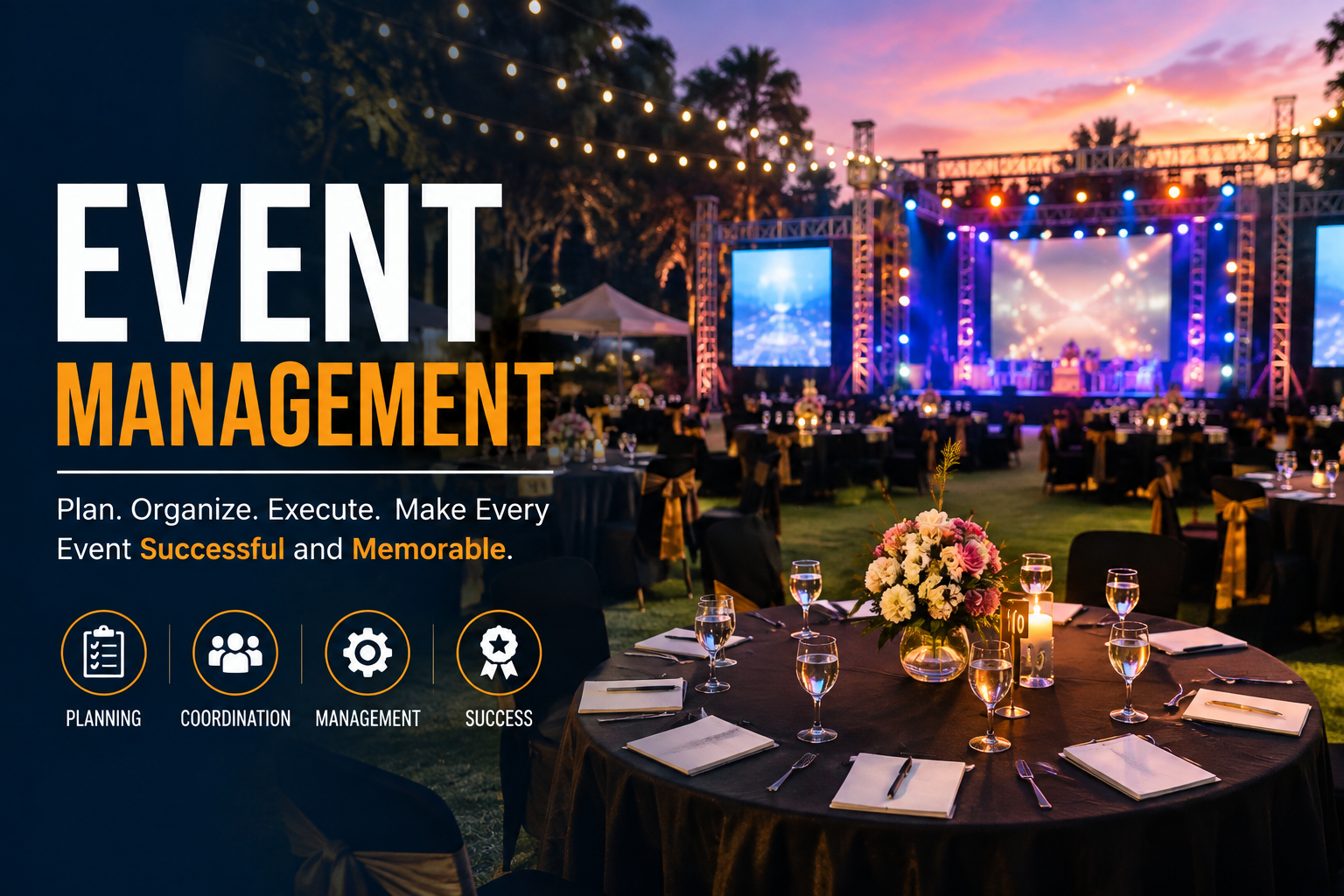
Event management is the art and process of planning, organizing, and successfully conducting an event. From small family celebrations to large corporate conferences, weddings, exhibitions, concerts, and festivals, every event requires careful planning and coordination. A well-managed event can create memorable experiences for guests while achieving the goals of the organizers.
What Is Event Management?
Event management involves managing every important detail before, during, and after an event. This includes choosing a venue, preparing a budget, arranging food and entertainment, managing invitations, coordinating staff, organizing transportation, and ensuring the event runs smoothly.
Event managers are responsible for bringing different elements together. They communicate with clients, vendors, performers, caterers, decorators, technical teams, and guests. Their ability to manage time, people, and resources is essential for a successful event.
Types of Events
There are many different types of events, and each requires a unique approach. Corporate events include conferences, seminars, meetings, product launches, and award ceremonies. Social events include weddings, birthdays, anniversaries, and family celebrations.
Other popular events include concerts, cultural festivals, exhibitions, trade shows, sports events, charity programs, and educational workshops. With the growth of technology, virtual and hybrid events have also become common.
Important Steps in Event Management
The first step in event management is understanding the purpose of the event. Organizers should identify the target audience, objectives, expected number of guests, and available budget.
The next step is creating a detailed plan. Choosing the right venue is important because it should match the size and nature of the event. Organizers also need to arrange decorations, seating, lighting, sound systems, catering, security, and transportation where necessary.
Promotion is another important part of event management. Social media, email marketing, websites, posters, advertisements, and personal invitations can help attract attendees.
On the event day, effective coordination becomes especially important. Event managers must monitor schedules, communicate with staff, solve unexpected problems, and ensure that guests have a positive experience.
The Importance of Technology
Technology has transformed modern event management. Online registration systems make it easier for guests to register. Event management software can help organizers manage schedules, guest lists, budgets, and communications.
Social media is also useful for promoting events and sharing updates. Digital screens, live streaming, online meetings, mobile applications, and cashless payment systems can make events more convenient and engaging.
Skills Required for Event Management
Successful event managers need strong organizational and communication skills. Time management, creativity, leadership, problem-solving, negotiation, and teamwork are equally important.
Unexpected situations can occur at any event, so event managers must remain calm and find quick solutions. Attention to detail is also essential because small mistakes can affect the overall experience.
Conclusion
Event management combines creativity, planning, teamwork, and organization to create successful experiences. Whether it is a corporate conference, wedding, festival, or community gathering, careful preparation can make a major difference.
A successful event is not only about what guests see on the day. It is the result of weeks or months of planning, coordination, and hard work behind the scenes. With the right strategy and professional management, any event can become a memorable and successful experience.