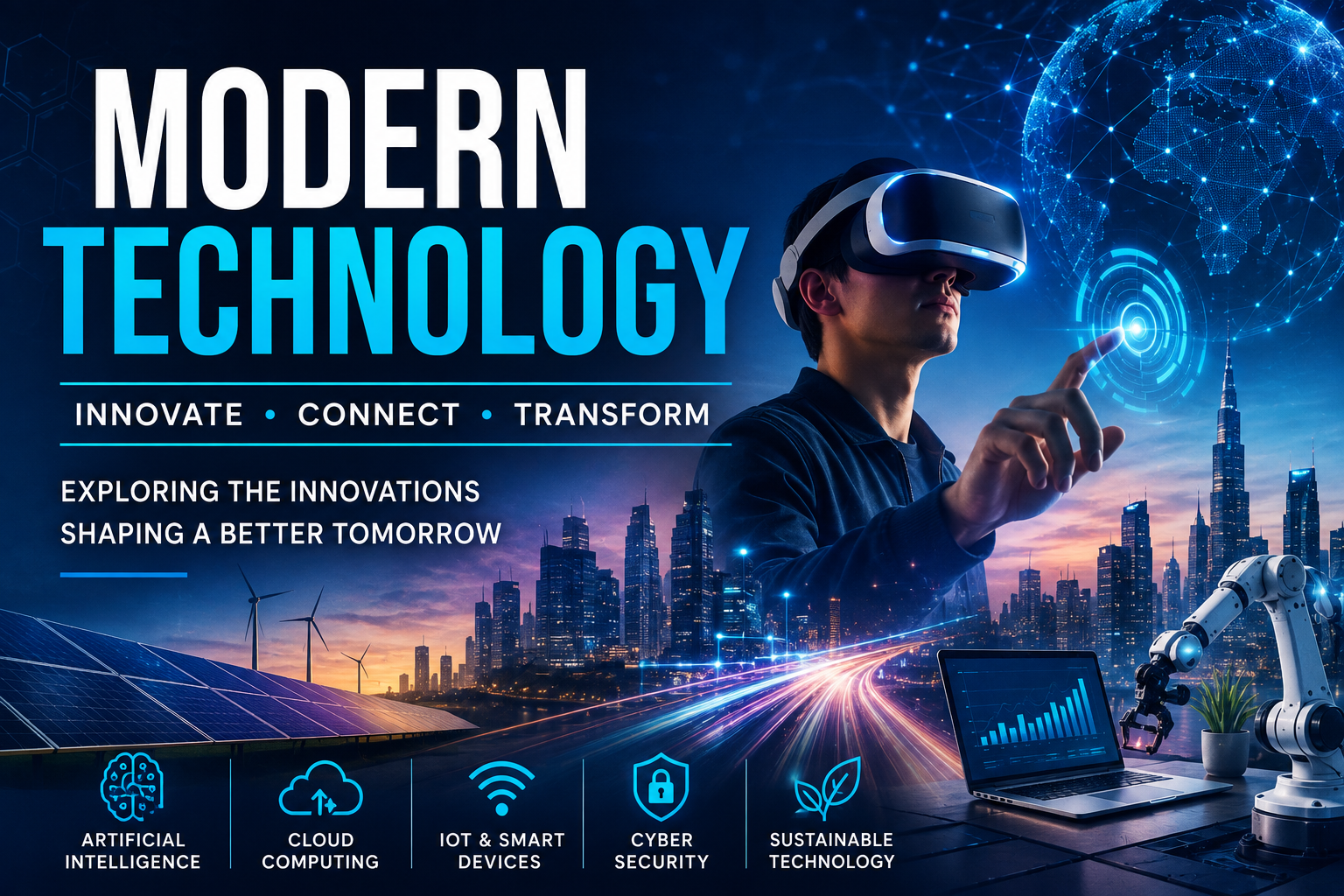
Modern technology has become an essential part of everyday life. From smartphones and artificial intelligence to cloud computing, smart devices, electric vehicles, and advanced communication systems, technology is changing how people work, learn, communicate, travel, shop, and entertain themselves.
Technology is no longer limited to computers and large machines. It is increasingly integrated into ordinary activities, often working quietly in the background. As innovation continues to accelerate, understanding modern technology has become important for individuals, businesses, and communities.
The Rise of Artificial Intelligence
Artificial intelligence, commonly known as AI, is one of the most important technological developments of recent years. AI systems can analyze information, recognize patterns, generate content, assist with decision-making, and automate many tasks.
Generative AI has expanded these capabilities by allowing people to work with systems that can produce text, images, audio, video, software code, and other forms of content. Businesses are using AI for customer service, marketing, research, data analysis, and productivity.
However, AI also creates important questions about privacy, accuracy, employment, copyright, and responsible use. The future of AI will therefore depend not only on technical progress but also on thoughtful rules and human oversight.
Smart Devices and Connected Living
Smart technology has changed the modern home. Smart televisions, speakers, watches, lighting systems, security cameras, thermostats, and appliances can connect to the internet and communicate with one another.
These devices can make everyday activities more convenient. People can control lights remotely, monitor home security, track fitness information, or manage appliances through mobile applications.
The Internet of Things, or IoT, connects physical devices to digital networks. As more devices become connected, homes, offices, factories, and cities can collect and use information in real time.
At the same time, connected devices require strong security. Weak passwords, outdated software, and poorly protected networks can create privacy and cybersecurity risks.
Technology in Education
Education has been transformed by digital technology. Students can access online courses, electronic books, educational videos, virtual classrooms, interactive applications, and digital libraries from almost anywhere.
Artificial intelligence can also support personalized learning by helping students practice concepts and receive immediate explanations. Teachers can use technology to organize lessons, create learning materials, and monitor student progress.
However, technology should support education rather than completely replace human interaction. Teachers continue to play an important role in motivation, critical thinking, creativity, and emotional support.
The Future of Work
Modern technology is changing workplaces in significant ways. Cloud platforms allow employees to access files and applications from different locations, while video conferencing makes remote collaboration possible.
Automation can perform repetitive tasks more efficiently, allowing workers to spend more time on creative, strategic, and interpersonal activities. AI-powered tools are also increasingly being used for writing, data analysis, software development, design, and research.
These changes mean that digital skills are becoming increasingly valuable. Workers may need to continuously learn new tools and develop skills that complement technology rather than compete directly with it.
Cybersecurity and Digital Privacy
As society becomes more dependent on technology, cybersecurity becomes increasingly important. Cyberattacks can affect individuals, businesses, hospitals, schools, and government organizations.
Common threats include phishing, malware, identity theft, data breaches, and account takeovers. Individuals can improve their security by using strong and unique passwords, enabling multi-factor authentication, keeping software updated, and being cautious with suspicious messages and links.
Digital privacy is another major concern. Many online services collect information about users, including browsing activity, preferences, locations, and purchasing behavior.
Understanding how personal information is collected and used is an important part of being a responsible digital citizen.
Electric Vehicles and Sustainable Technology
Technology is also contributing to changes in transportation and energy. Electric vehicles are becoming more widely available, while improvements in batteries and charging infrastructure continue to support their development.
Renewable energy technologies, including solar and wind power, are also advancing. Smart energy systems can help monitor consumption and improve the efficiency of electricity networks.
Technology alone cannot solve environmental problems, but innovation can provide tools that help societies reduce waste, improve efficiency, and transition toward more sustainable systems.
Cloud Computing
Cloud computing has changed how people and organizations store and access information. Instead of relying entirely on physical computers or local servers, users can access computing resources and data through internet-based services.
For businesses, cloud technology can reduce infrastructure requirements and make it easier to scale services. For individuals, cloud storage makes it possible to access photographs, documents, and other files from multiple devices.
Cloud computing has also become an important foundation for modern applications, artificial intelligence, online collaboration, and digital services.
The Importance of Digital Skills
Having access to technology is not enough. People also need the knowledge to use it effectively and safely.
Digital literacy includes understanding how to search for reliable information, recognize misleading content, protect personal data, use online services responsibly, and communicate effectively through digital platforms.
As technology continues to evolve, learning will become a lifelong process. Students and professionals who develop adaptable digital skills can better respond to changes in the workplace and society.
Technology and Human Connection
Technology has made communication faster and more convenient. Messaging applications, social media, video calls, and online communities allow people to communicate across geographical boundaries.
However, constant connectivity can also create challenges. Excessive screen time, online distractions, misinformation, and reduced face-to-face interaction can affect people's daily lives.
The goal should not be to reject technology but to use it intentionally. Setting boundaries, taking breaks from screens, and maintaining meaningful offline relationships can help create a healthier balance.
What the Future May Bring
The next generation of technology is likely to bring continued developments in artificial intelligence, robotics, biotechnology, quantum computing, advanced connectivity, and immersive digital experiences.
Some technologies may become so common that people barely notice them. Just as smartphones and internet connectivity have become ordinary parts of life, future innovations may become integrated into homes, workplaces, transportation, and healthcare.
The most important question is not simply what technology can do. It is how society chooses to use it.
Conclusion
Modern technology has transformed the way people live and work. It has created new opportunities in education, business, communication, transportation, entertainment, and many other areas.
At the same time, technological progress brings responsibilities. Privacy, cybersecurity, misinformation, environmental impact, and responsible AI development require careful attention.
The future will not be shaped by technology alone. It will be shaped by the decisions people make about how technology is designed, regulated, adopted, and used.
Ultimately, the greatest benefit of modern technology comes when innovation remains focused on improving people's lives. By combining technological progress with human creativity, responsibility, and critical thinking, society can build a future where technology serves people rather than the other way around.