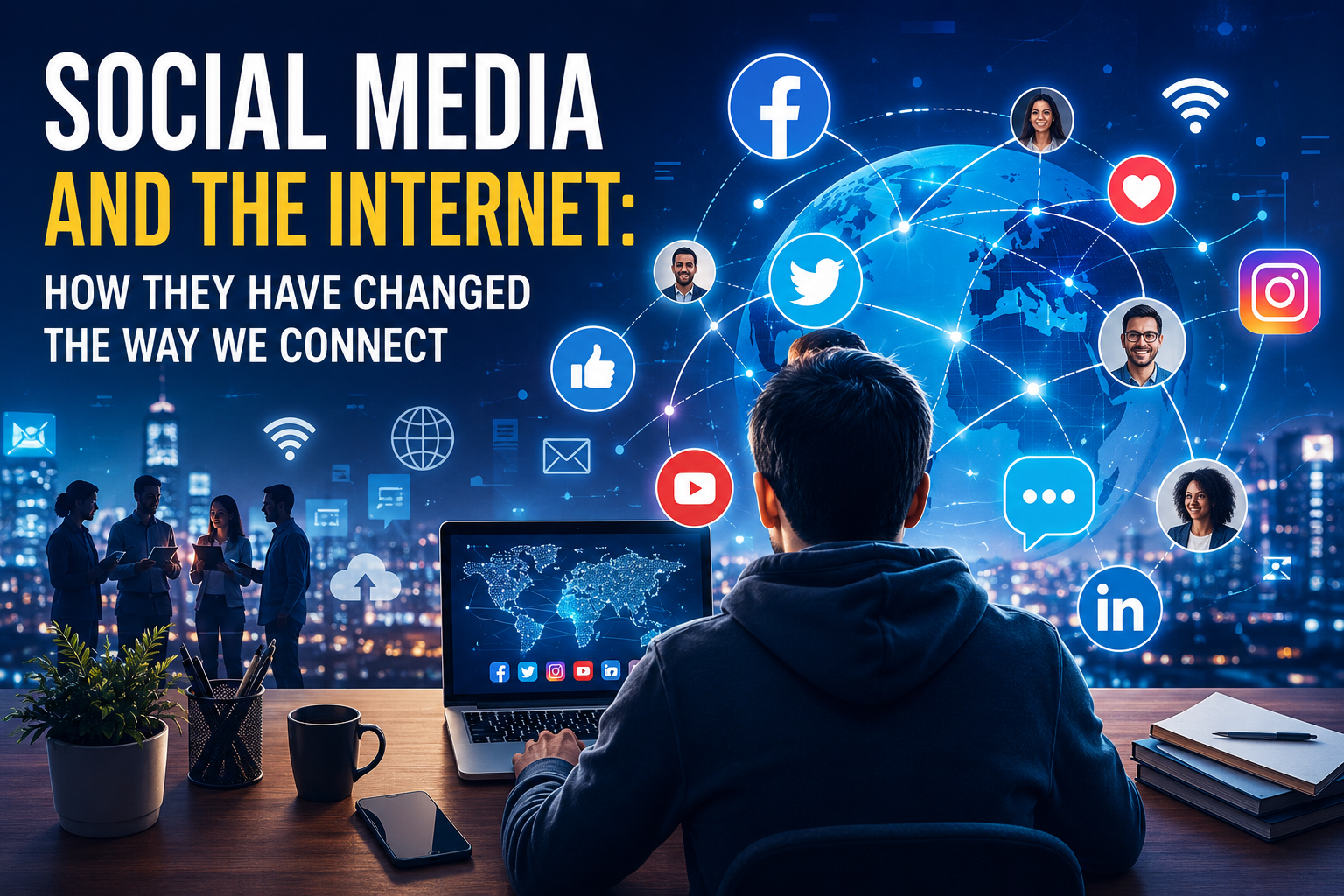
Social Media and the Internet: How They Have Changed the Way We Connect
The internet has completely changed the way people communicate, learn, work, shop, and entertain themselves. Among the many technologies that have grown because of the internet, social media has become one of the most influential. Today, billions of people use social media platforms to communicate with friends, share ideas, discover information, follow businesses, watch videos, and stay connected with the world.
Social media is no longer simply a place for sharing photographs and personal updates. It has become an important part of modern digital life. From individuals and students to businesses, organizations, and creators, almost everyone can use social media to reach an audience.
Understanding the relationship between social media and the internet can help people use these powerful tools more effectively and responsibly.
What Is Social Media?
Social media refers to websites and applications that allow people to create, share, discuss, and interact with content online. Unlike traditional media, where information generally moves from one publisher to a large audience, social media allows users to participate directly.
People can create posts, upload photographs, publish videos, write comments, send messages, and share content with others. This interactive nature is one of the main reasons social media has become so popular.
Social media can be used for many different purposes, including:
Staying in contact with friends and family
Sharing personal experiences
Learning new information
Promoting businesses and products
Building professional networks
Watching entertainment content
Following news and current events
Developing online communities
Promoting creative work
Communicating with customers
The internet provides the infrastructure that makes these activities possible. Without internet connectivity, modern social media platforms would not function in the way people expect.
How the Internet Changed Communication
Before the internet became widely available, communication was often slower and more limited. People relied heavily on letters, telephone calls, newspapers, television, and face-to-face meetings.
The internet introduced email, instant messaging, websites, online forums, and eventually social networking platforms. Communication became faster, easier, and more global.
Today, a person can send a message to someone on another continent within seconds. Families separated by distance can communicate through video calls. Businesses can speak directly with customers, and students can communicate with teachers and classmates through online platforms.
Social media has taken this development even further by combining communication with content sharing and online communities.
The Benefits of Social Media
One of the biggest advantages of social media is connectivity. People can maintain relationships even when they live far apart. A simple message, photograph, or video can help people stay involved in each other's lives.
Social media is also a valuable educational resource. Students and learners can find tutorials, discussions, educational videos, articles, and online communities covering almost every subject. Someone interested in technology, history, science, business, cooking, photography, or another field can find useful information online.
For businesses, social media provides an opportunity to reach potential customers without relying entirely on traditional advertising. Small businesses can create online profiles, publish useful content, answer customer questions, and develop relationships with their audience.
Social media can also provide opportunities for creators. Writers, photographers, artists, musicians, educators, and video creators can share their work with audiences around the world.
Social Media and Businesses
The internet has changed the way businesses communicate with customers. In the past, companies often depended on newspapers, television, radio, billboards, and other traditional forms of advertising.
Today, social media can be an important part of digital marketing.
Businesses can use social platforms to introduce products, explain services, answer questions, collect feedback, and build brand awareness. A useful post or interesting video can potentially reach thousands or even millions of people.
Social media also allows businesses to understand their audiences better. Comments, messages, reactions, and other forms of engagement can provide valuable information about customer interests and expectations.
However, successful social media marketing requires consistency. Simply creating an account is not enough. Businesses need to publish useful and relevant content while communicating honestly with their audience.
The Importance of Privacy Online
Although social media offers many advantages, it also creates privacy concerns. People often share personal information online without considering how widely it might spread.
Names, photographs, locations, workplaces, schools, contact information, and personal opinions can all become part of a person's digital presence.
Users should therefore review their privacy settings and think carefully before publishing sensitive information. It is also important to use strong passwords and enable additional security features when available.
People should remember that deleting a post does not always mean that it has disappeared completely. Other users may have saved, copied, or shared the content.
Being careful about what we share is an important part of responsible internet use.
Social Media and Misinformation
Another major challenge is misinformation. Because anyone can publish content online, not everything shared through social media is accurate.
False information can spread quickly, especially when a post is emotional, surprising, or controversial. Users should therefore avoid automatically believing or sharing information simply because it appears on a social media platform.
Before sharing important information, it is useful to check the source, compare information from reliable websites, and look for supporting evidence.
Digital literacy is becoming increasingly important because people need to understand not only how to use the internet but also how to evaluate the information they encounter.
The Impact on Everyday Life
Social media has become deeply connected to everyday life. Many people check social platforms when they wake up, communicate with others throughout the day, and use them for entertainment in the evening.
This convenience can be beneficial, but excessive use can also become distracting. Spending too much time scrolling through content may reduce time available for work, study, exercise, sleep, and face-to-face relationships.
A balanced approach is therefore important. Users can benefit from setting reasonable limits, turning off unnecessary notifications, and taking regular breaks from screens.
The Future of Social Media and the Internet
The relationship between social media and the internet will continue to evolve. New technologies are likely to change how people communicate and consume content.
Artificial intelligence, virtual reality, augmented reality, faster internet connections, and new digital services could make online experiences more interactive and personalized.
At the same time, issues such as privacy, cybersecurity, misinformation, and responsible technology use will remain important.
The future of social media will not depend only on technological development. It will also depend on how individuals, businesses, governments, and technology companies choose to use these tools.
Frequently Asked Questions
Why is social media important?
Social media is important because it allows people to communicate, share information, build communities, promote businesses, and discover content quickly through the internet.
How does the internet support social media?
The internet provides the connection that allows social media applications and websites to exchange information between users and their servers. Without internet access, most modern social media services cannot be used.
Is social media useful for education?
Yes. Social media can provide educational videos, communities, discussions, tutorials, expert content, and opportunities to communicate with other learners. However, information should always be checked for accuracy.
How can people use social media safely?
People can improve their online safety by using strong passwords, protecting personal information, checking privacy settings, avoiding suspicious links, and thinking carefully before sharing content.
Conclusion
Social media has become one of the most significant developments made possible by the internet. It has transformed communication by allowing people to connect, share, learn, work, and entertain themselves from almost anywhere.
Its benefits are considerable, but responsible use is essential. Privacy concerns, misinformation, excessive screen time, and online security are challenges that users should take seriously.
The internet and social media will continue to develop as technology changes. By using these platforms thoughtfully, checking information carefully, protecting personal data, and maintaining a healthy balance between online and offline life, people can make better use of the opportunities that the digital world provides.
Social media is more than a collection of websites and applications. It is now an important part of modern communication, and understanding how to use it responsibly is an essential digital skill.