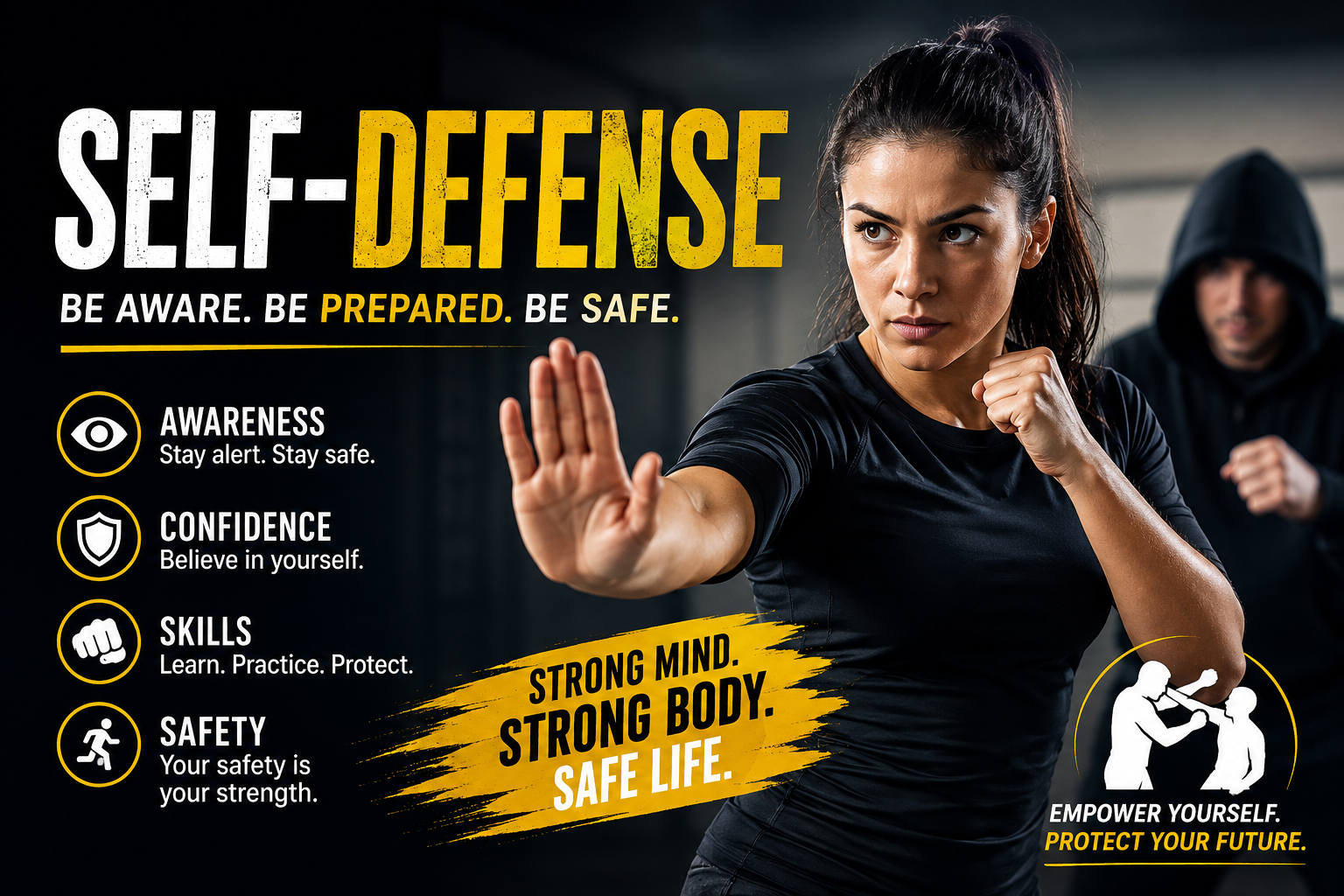
Self-defense is an important life skill that helps people feel more confident and prepared in uncertain situations. It is not simply about fighting or defeating another person. True self-defense begins with awareness, good judgment, communication, and knowing how to avoid dangerous situations whenever possible.
What Is Self-Defense?
Self-defense refers to actions and skills used to protect yourself from potential harm. It can include physical techniques, verbal communication, situational awareness, and strategies for escaping unsafe environments.
Learning self-defense does not mean looking for conflict. Instead, the goal is to recognize potential risks early and make safe decisions.
Why Is Self-Defense Important?
Everyday situations can sometimes become unpredictable. Knowing basic self-defense principles can improve confidence and help people remain calm under pressure. It can also encourage individuals to pay greater attention to their surroundings.
Self-defense training can provide physical benefits as well. Activities such as martial arts, boxing, or other fitness-based training can improve coordination, balance, strength, flexibility, and overall fitness.
Awareness Is the First Step
One of the most valuable self-defense skills is situational awareness. Pay attention to your surroundings, especially when walking alone or visiting unfamiliar places. Avoid becoming completely distracted by a phone or headphones when you need to stay alert.
Trusting your instincts is also important. If a situation or person makes you uncomfortable, create distance and move toward a safer, more populated location.
Communication Can Prevent Conflict
Not every dangerous situation requires physical action. Calm and confident communication can sometimes prevent a disagreement from becoming more serious.
Using a clear voice, maintaining appropriate distance, and avoiding unnecessary arguments can help reduce tension. If someone is behaving aggressively, the safest choice may be to leave rather than continue the confrontation.
Learning Physical Self-Defense
Structured training can teach people how to respond appropriately during emergencies. Martial arts and self-defense classes can help develop discipline, confidence, balance, and controlled movement.
A good instructor should emphasize safety, prevention, escape, and responsible behavior rather than encouraging unnecessary aggression. Beginners should practice techniques under proper supervision.
Preparing for Emergencies
Being prepared can make a significant difference. Keep emergency contacts accessible, know important local emergency services, and let someone you trust know when you are traveling to an unfamiliar place.
Simple habits such as planning your route, staying in well-lit areas, and keeping your attention focused on your surroundings can reduce unnecessary risks.
Self-Defense and Confidence
Self-defense is ultimately about developing confidence without becoming aggressive. A confident person can recognize risks, establish boundaries, seek help, and make sensible decisions during stressful situations.
The most effective approach is prevention whenever possible. Avoiding dangerous situations, leaving early, and seeking assistance are often safer than confronting a threat.
Conclusion
Self-defense is more than physical strength. It combines awareness, confidence, communication, preparation, and responsible decision-making. By learning practical safety skills and maintaining awareness of our surroundings, we can become better prepared to protect ourselves and make safer choices.
Remember: the goal of self-defense is not to win a fight—it is to stay safe and get away from danger.